
US Maize Crop Development
- Monday August 4 2008
This analysis featured in the August 4, 2008 issue of the HGCA's MI Prospects, Volume 11, Issue 3
The development of the 2008 US maize crop has been very different from all other crops this year. An added dimension is the still continuing growth in ethanol production requirements. Feed grain price prospects which are so dependent on US maize supplies have therefore been very uncertain and are likely to be so until mid-October. Generally, however, price prospects remain favourable.
Planting the '08 maize crop was delayed by field conditions. This had also been a factor in 2007, but in a two-week period in mid-May '07 over half of the record US maize crop area was sown, and ultimately the third heaviest yielding maize crop was harvested in autumn '07. With a smaller area planted for the '08 harvest (farmers have responded to market signals and planted more soyabeans), this year’s challenge seemed more modest.
Concern, however, heightened when reports of saturated soiled conditions began to be replaced by those of flooding. In early June the proportion of USDA crop reports rating crop condition as good or excellent declined from an above average 73% to a well below average 57%. Uncertainty was also evident as to how much was actually planted, how well it would survive the flooding and how much would be harvested as grain. New crop maize prices moved out of a $240 to $250/t range, abruptly advancing by $60/t to record levels.
continue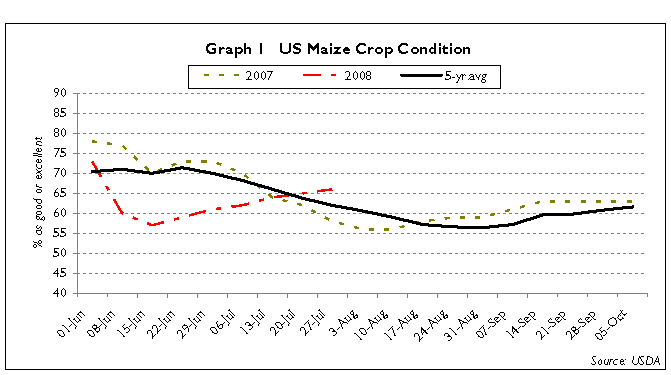
In late June the USDA’s first planted area report, which included re-interviewing of farmers in flood affected areas, indicated that 35.3M ha were planted, 7% below '07 plantings but above trade expectation and above the March ’08 prospective planting survey area of 34.8M ha. An area of 31.9M ha was expected to be harvested as grain. This and continued improvement in the USDA’s weekly ratings have pushed maize price more than $60/t lower during July. The crop is now rated in above average condition, following very favourable field moisture conditions over the last six weeks.
At the end of July, the major concern is that of conditions for pollination. Normally this process is completed by this date, but the crop is about a week later than normal. Temperatures above about 36 degrees Celsius are generally considered to be detrimental to the pollination process and such conditions are more frequent in late than early July in the US Corn Belt. But with such temperatures not yet been prevalent and not forecast for early August, this is a receding concern. As of 27 July, 59% of the crop was reported to be silking and this will probably be at above the 80% after another week.
Once pollination is complete, warmer weather is beneficial for crop maturity. While the risk of frost damage is less than it would have been in the past, it is still a factor. Hence, hot weather that recently has been considered detrimental to yield prospects will be beneficial by mid-August. And, unless mid and late August are particularly warm in which cases prices will probably moderate, weather responsive markets will continue until the crop is beyond the risk of frost, which is likely to be in early October.
David Walker 001 780 434 7615
top of page